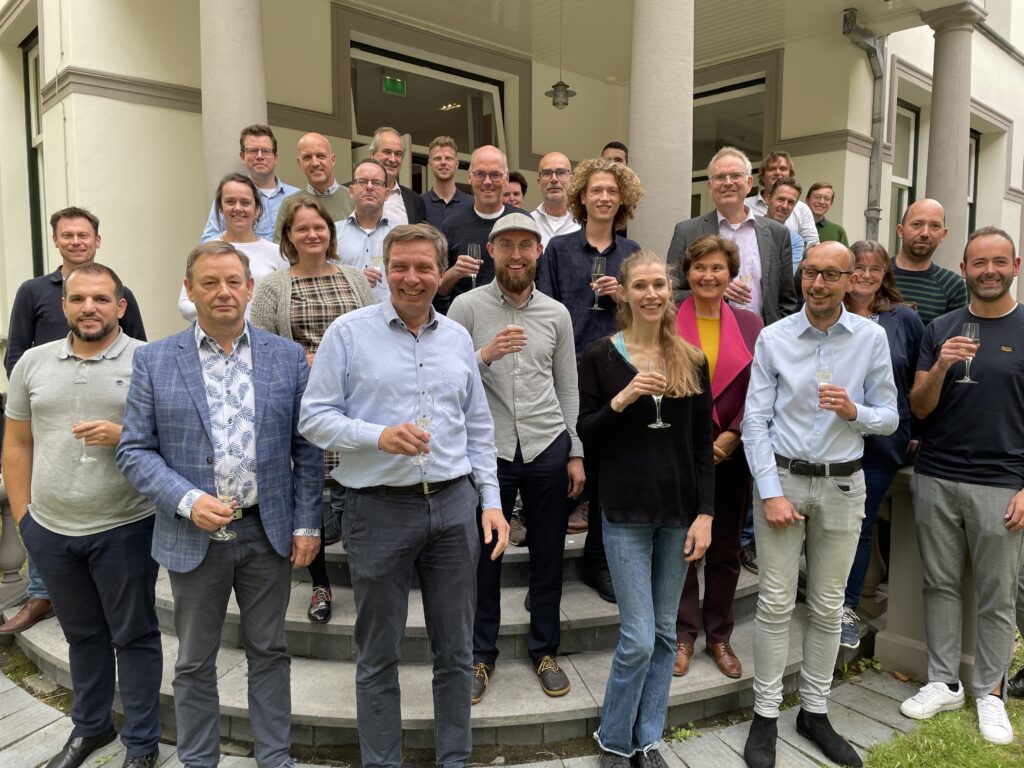
We added our PD and PhD student team.
Poultry is the largest source of animal protein for human consumption in the world and because of its relatively low production costs and carbon footprint, and absence of religious barriers, poultry production is essential to feed the growing world population (FAO, 2018). The Netherlands is an important export country for poultry eggs and meat with 32 million laying hens and 49 million broiler chickens on 1200 farms (CBS, 2020). In livestock farming, and especially in poultry, the large-scale operations and high production efficiency requirements make animals very vulnerable to infections. At the same time, societal demands are resulting in reduced use of antimicrobials in animal feed, more poultry with access to an outdoor range and changes to organic and more circular feed concepts. These developments substantially benefit, but paradoxically may also threaten the sustainability of poultry production. For example, increased contact with the outdoor world increases infection risks and novel feeding concepts may reduce intestinal health. This may have a negative impact on chicken health and welfare, production efficiency and ecological footprint and increases farmhouse emissions and risks for foodborne infections. Therefore, to make these transitions in livestock farming possible, we need to invest in novel methods to improve veterinary health.
Currently, many infections are not discovered until after widescale spread within or between flocks, or after foodborne or other zoonotic infections affecting public health have already occurred. For example, intestinal colonisations with Campylobacter and Salmonella often remain undetected, and are therefore the most common causes of food poisoning of consumers of eggs or meat (Maran, 2020). Also, severe intestinal inflammation with Clostridium perfringens (also a zoonotic pathogen) often does not occur until widespread flock infection with Eimeria (a protozoal intestinal parasite) has occurred (Timbermont et al., 2011). And red blood mites between the feathers of chickens do not become visible until they are so numerous that they accumulate in the housing system (Flochlay et al., 2017). At a late stage of detection, when most damage already has been done, it is also too late for preventive interventions, which results in more rigorous treatments of entire flocks with antibiotics or chemicals. These treatments can induce antibiotic resistance and leave residues in poultry products and the environment.
In this project, we aim at two highly prevalent and impactful cases: